
DESTINATION · SOUTHERN AFRICA
Namibia — where the world’s oldest desert meets the ocean
Some of the highest dunes on Earth. Desert-adapted elephants and lions. A wild, haunting coastline unlike anywhere else. Namibia is the kind of destination that leaves even seasoned Africa travellers speechless.
LUXURY TRAVEL TO NAMIBIA
Namibia is more than a safari — it is a landscape alive with possibility.
The Namib is one of the world’s oldest deserts, shaped over tens of millions of years and home to some of Africa’s most striking landscapes: the red dunes of Sossusvlei, the skeletal trees of Deadvlei and vast horizons that seem to stretch forever. But Namibia is not only about scenery. It is one of the few places in Africa where desert-adapted elephants, lions and black rhino still roam wild across immense, remote landscapes.
As one of the least densely populated countries on the continent, Namibia offers a completely different style of travel — quieter, more intimate and deeply visual. At Siente Africa, we design every Namibia journey entirely around you, combining the finest lodges in each region with carefully planned logistics from beginning to end.
WHY CHOOSE NAMIBIA
Five reasons to travel to Namibia
Some of Africa’s most photogenic landscapes
Sossusvlei, Deadvlei, the Skeleton Coast and Fish River Canyon give Namibia an extraordinary concentration of dramatic scenery. From sculpted dunes to vast canyons and empty coastlines, every region feels visually distinct.
Remarkable desert-adapted wildlife
Namibia is one of the few places in Africa where desert-adapted elephants, lions and black rhino still roam wild across vast arid landscapes. Their behaviour and survival strategies make wildlife encounters here unlike those found in more traditional safari destinations.
Some of the clearest night skies on Earth
Namibia’s low population density and minimal light pollution create exceptional conditions for stargazing. The NamibRand Nature Reserve is internationally recognised for the quality of its dark skies and offers some of the continent’s finest astronomy experiences.
The Skeleton Coast — one of Africa’s wildest coastlines
Seal colonies, historic shipwrecks, towering dunes and an Atlantic coastline that feels almost otherworldly. The most remote sections are reached by light aircraft, adding to the sense of isolation and drama.
Etosha — one of Africa’s great wildlife parks
Etosha National Park is defined by its immense salt pan and exceptional game viewing around permanent waterholes. Black rhino, lions, elephants, giraffes and a remarkable variety of plains game can all be seen against one of Africa’s most distinctive landscapes.
“Namibia is the kind of place that changes the way you see Africa.”
REGIONS
Namibia’s essential destinations
WHEN TO GO
Best time to travel to Namibia
Feb — Apr
GREEN SEASON — NEWBORN WILDLIFE & BIRDLIFEAfter the summer rains, parts of Namibia briefly turn green. Etosha is particularly rewarding, with newborn animals and excellent birdlife, while Sossusvlei sees fewer visitors and often more attractive rates.Temperatures can be very high in the interior, so this period suits travellers who do not mind the heat.
May — Oct
⭐ DRY SEASON — BEST TIME TO TRAVELThis is the classic time to visit Namibia, with clear skies, comfortable daytime temperatures and excellent wildlife viewing as animals gather around Etosha’s waterholes.
Conditions are also ideal for photographing the dunes of Sossusvlei at sunrise. Nights can be cold, especially in the desert, and the night skies are exceptional. For the most sought-after lodges, booking well in advance is highly recommended.
Jun — Aug
PEAK WINTER — ETOSHA AT ITS BESTThese are some of the coolest months of the year and among the best for safari in Etosha. Wildlife concentrates around the waterholes, creating excellent viewing opportunities, while daytime temperatures in the desert are particularly comfortable. It is an excellent time to combine Etosha and Sossusvlei in one journey.
ACCOMMODATION
Namibia’s finest lodges
Lodges where architecture, wilderness and a sense of place come together effortlessly.
Damaraland
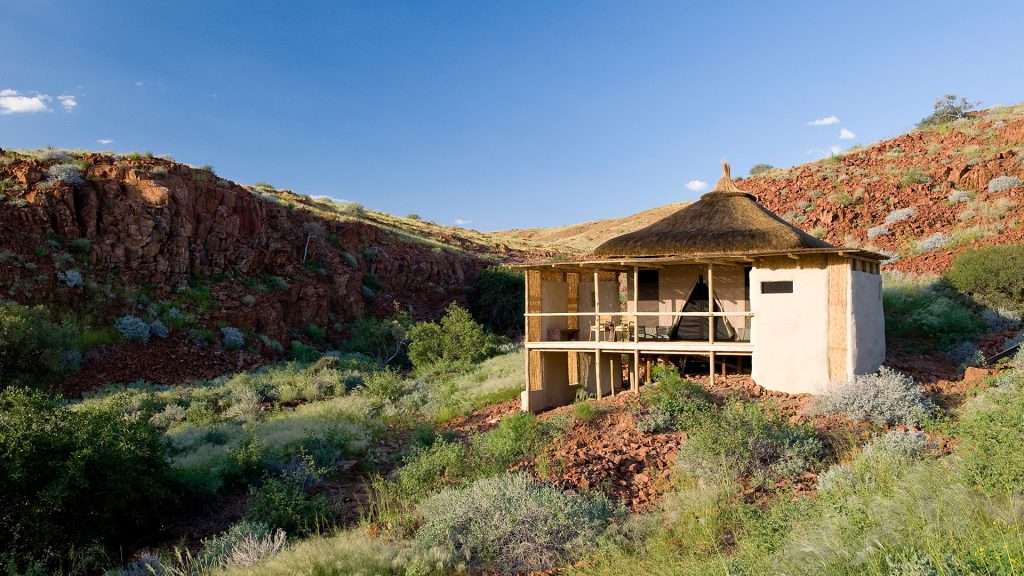
Damaraland Camp
Safari in the ancient heart of Namibia Damaraland Camp is a distinctive safari camp located in the heart of Damaraland, one of Namibia's oldest and most visually striking regions. This camp offers a perfect blend of ancient nature, resilient wildlife,...
Ver alojamiento →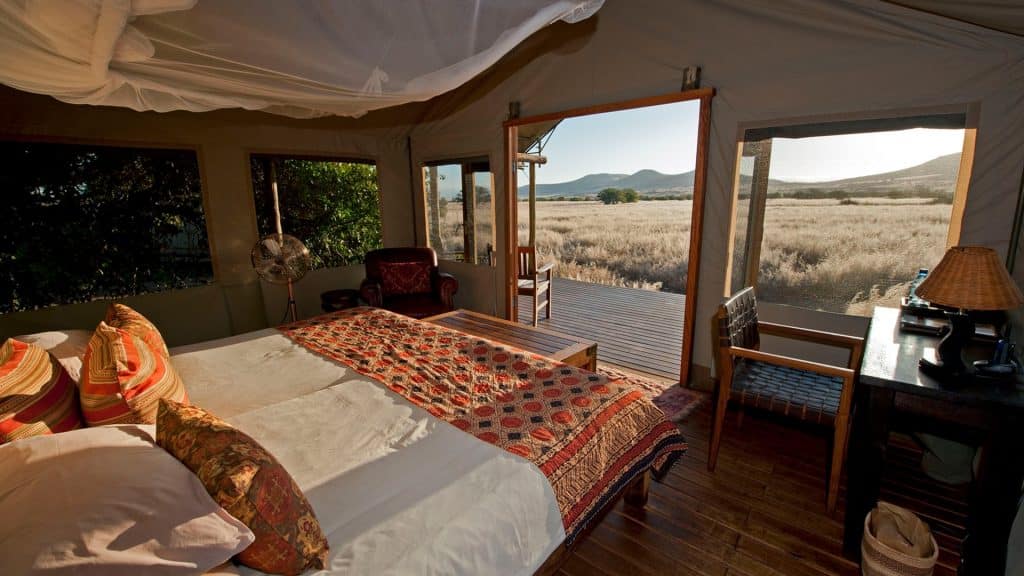
Damaraland
Desert Rhino Camp
Black Rhino Tracking Safari and Extreme Wilderness in Damaraland Desert Rhino Camp is a luxury safari camp located in the heart of Damaraland, one of Namibia’s oldest and most remote wilderness regions. Set within a private concession in a vast...
Ver alojamiento →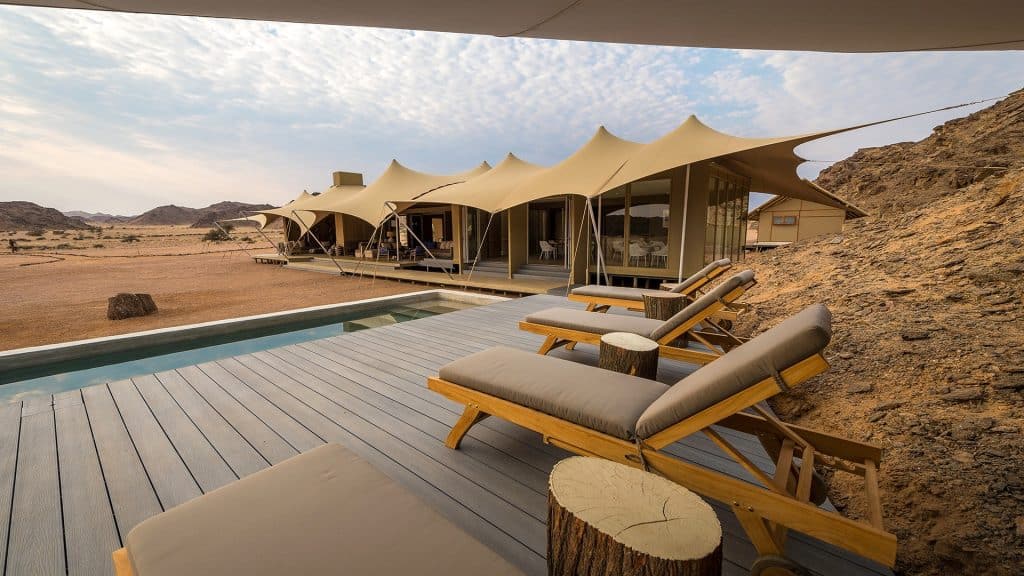
Kunene
Hoanib Skeleton Coast Camp
A Remote and Luxurious Safari Camp at the Meeting Point of Desert and Coast Wilderness Hoanib Skeleton Coast Camp is an exclusive safari camp located in one of Namibia’s most remote and spectacular regions, nestled in the Hoanib River Valley...
Ver alojamiento →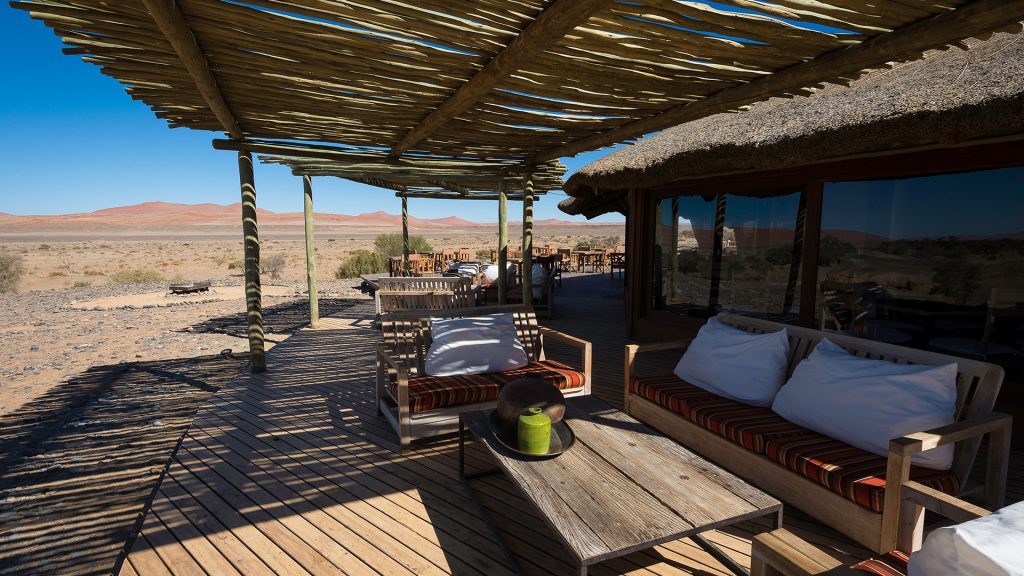
Sossusvlei
Kulala Desert Lodge
Accessible Luxury on the Edge of the Namib Desert Kulala Desert Lodge is a welcoming retreat strategically located at the gateway to the Namib Desert, in the heart of the Sossusvlei region. Designed for travellers seeking comfort, proximity to the...
Ver alojamiento →FREQUENTLY ASKED QUESTIONS
What travellers ask us most about Namibia
When is the best time to travel to Namibia?
May to October is generally the best time to visit, with clear skies, comfortable temperatures and excellent wildlife viewing as animals gather around Etosha’s waterholes.
June, July and August are especially rewarding for safari, while Sossusvlei can be visited year-round. The hottest months in the interior are typically from November to January, when temperatures can become intense.
Namibia is at its most comfortable and accessible during the dry season.
How many days do I need for a Namibia journey?
We recommend a minimum of 9–11 nights to combine the country’s three key regions: around 3 nights in Sossusvlei, 2–3 nights in Damaraland and 3 nights in Etosha.
If you would like to add the Skeleton Coast, allow another 2–3 nights.
Namibia is a vast country, and travelling at a slower pace makes a significant difference to the experience.
What is Deadvlei, and why is it so famous?
Deadvlei is a white clay pan within Namib-Naukluft National Park, surrounded by some of the world’s highest dunes.
Its ancient camel-thorn trees died centuries ago after shifting dunes cut them off from the water supply. Their dark, skeletal forms against the white clay, red dunes and deep blue sky have made Deadvlei one of the most photographed landscapes in Africa.
What wildlife can I see in Namibia that feels different from other African destinations?
Namibia is renowned for wildlife that has adapted to some of the continent’s harshest environments.
Desert-adapted elephants roam across vast dry riverbeds in the northwest, while desert lions survive in arid landscapes stretching towards the Skeleton Coast. Namibia is also one of the best places in Africa to track free-ranging black rhino in remote wilderness areas.
What makes these encounters so special is not that the species are unique to Namibia, but the landscapes and conditions in which they live.
Can I travel through Namibia by campervan or rental car?
Yes. Namibia is one of the best countries in Africa for self-drive travel, thanks to its well-marked roads, low traffic levels and excellent tourism infrastructure.
For a luxury journey, however, we often combine exceptional private lodges with light-aircraft transfers between regions. This avoids long driving days and allows you to spend more time experiencing each destination.
Some of the most remote areas of the Skeleton Coast are best accessed by air.
Can Namibia be combined with Botswana or South Africa?
Absolutely. Namibia and Botswana complement each other beautifully: Namibia’s vast desert landscapes contrast with the waterways and wildlife of the Okavango Delta.
South Africa is another natural combination. Sossusvlei and Etosha pair particularly well with Cape Town or Sabi Sand, creating a journey that brings together desert landscapes, classic safari and one of Africa’s most cosmopolitan cities.
Do I need a visa to enter Namibia?
Entry requirements depend on your nationality, and Namibia’s visa rules have changed in recent years.
Some travellers can enter visa-free, while others may require a visa or visa on arrival. As part of your journey planning, Siente África will confirm the latest requirements for your passport and advise you on the correct process before you travel.
INSPIRATION
Journeys featuring Namibia
These are a few of the journeys we have designed for real clients. Think of them as a starting point — every itinerary can be completely tailored to your dates, travel party and interests.
YOUR NAMIBIA JOURNEY STARTS HERE
We design your journey exactly as you imagine it
Tailor-made journeys, designed around the way you want to travel.
Personal service, expert knowledge and every detail taken care of.

