
DESTINATION · INDIAN OCEAN
Mozambique — the untouched Indian Ocean Africa kept for itself
Remote archipelagos, dugongs gliding among manta rays, and dhows sailing through waters far from the crowds. One of the Indian Ocean’s most authentic luxury escapes, just hours from some of Africa’s finest safari destinations.
LUXURY TRAVEL TO MOZAMBIQUE
Mozambique is more than a beach destination — it is one of the Indian Ocean’s last untouched paradises.
While much of the world discovered the Maldives and Seychelles, Mozambique remained quietly under the radar. Its 2,470 kilometres of coastline, protected marine archipelagos and distinctive Arab-Portuguese heritage have created one of Africa’s most layered and authentic coastal destinations.Here, beaches feel genuinely remote. The Bazaruto Archipelago is home to one of the western Indian Ocean’s most important dugong populations, while the Quirimbas in the north offer coral islands where tiny luxury lodges can feel almost entirely private.At Siente Africa, we design each Mozambique journey around the most exceptional properties in both archipelagos, coordinating private and charter flight logistics to make even the most remote islands feel effortless to reach.
WHY CHOOSE MOZAMBIQUE
Five reasons to travel to Mozambique
One of the last strongholds of dugongs in the western Indian Ocean
The Bazaruto Archipelago is home to one of the most important remaining dugong populations in the western Indian Ocean. Seeing these rare marine mammals in the wild, feeding in shallow seagrass beds, is one of Mozambique’s most distinctive wildlife experiences.
Two archipelagos, two completely different worlds
Bazaruto, in the south, is known for sweeping sand islands, turquoise channels and easy access from the mainland. The Quirimbas, in the north, feel far more remote, with coral islands, centuries of Swahili and Portuguese history, and intimate lodges where seclusion is part of the experience.
Gorongosa — one of Africa’s great conservation stories
After years of conflict devastated its wildlife, Gorongosa National Park has undergone one of the continent’s most remarkable ecological recoveries. Today, elephants, lions, buffalo, hippos and other species are returning in strength, making it a safari experience with a powerful conservation story behind it.
World-class diving without the crowds
Mozambique’s reefs — from the Quirimbas to Tofo and Bazaruto — offer exceptional marine biodiversity. Whale sharks, manta rays and vibrant coral systems are among the highlights, often with far fewer boats and divers than in better-known Indian Ocean destinations.
The perfect complement to an African safari
Mozambique combines beautifully with safaris in South Africa, Zimbabwe, Tanzania and beyond. Its location makes it possible to move from game drives and the savannah to the Indian Ocean with relatively little travel, creating one of the most rewarding safari-and-beach combinations in Africa.
“In Mozambique, the Indian Ocean still feels much as it always has.”
REGIONS
Mozambique’s essential destinations
WHEN TO GO
Best time to travel to Mozambique
Dec — Mar
RAINY SEASON — CYCLONE RISKExpect hot, humid conditions, with temperatures often around 30–35°C. December to March is cyclone season; storms are infrequent, but when they occur they can affect flights, transfers and resort operations.
Diving visibility is generally reduced, and some of the most exclusive lodges close during the low season. This period is best suited to travellers prioritising lower rates or specific marine encounters, particularly around Tofo.
Jun — Oct
⭐ PEAK DRY SEASON — BEST TIME TO TRAVELThis is the most sought-after period for luxury travel. The weather is dry, temperatures are comfortable and marine visibility is at its best.
Humpback whales migrate along the coast between roughly June and November, with excellent sightings around Bazaruto during the winter months. Gorongosa also offers very good safari conditions at this time.
For the most exclusive lodges, booking at least 6 months in advance is highly recommended.
Apr — May
SHOULDER SEASON — AN EXCELLENT ALTERNATIVEThe rains begin to ease from April and skies gradually clear. May is an excellent choice for travellers looking for dry-season conditions without the peak pricing of July and August.
Expect fewer visitors, quieter lodges, good diving conditions and warm water — a particularly attractive window for those travelling in the northern spring.
ACCOMMODATION
Mozambique’s finest resorts and private islands
In Mozambique, where you stay is not simply part of the journey — it is the destination itself. Each lodge exists in a setting of extraordinary privacy, shaped by remoteness, nature and a sense of exclusivity that conventional resorts rarely match.
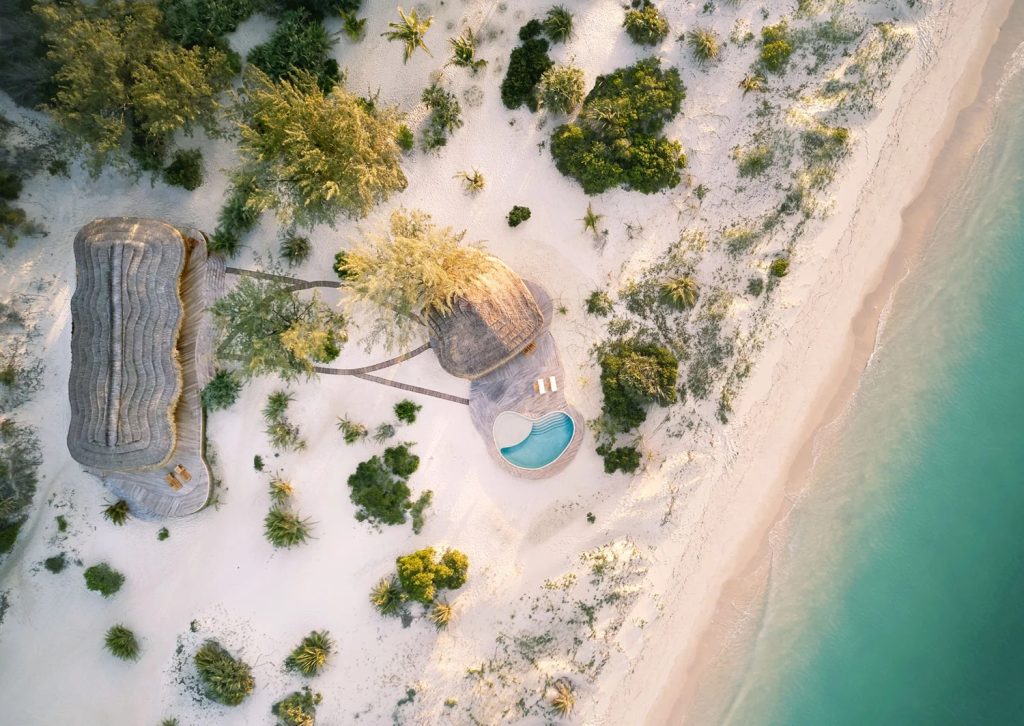
Bazaruto Archipelago
Kisawa Sanctuary
Hidden among pristine sand dunes, tropical forests and unspoilt beaches on Benguerra Island, Kisawa Sanctuary is one of Mozambique's most extraordinary ultra-luxury retreats. Set within 300 hectares of spectacular natural surroundings in the Bazaruto Archipelago, this exclusive sanctuary offers a rare...
Ver alojamiento →
Bazaruto Archipelago
andBeyond Benguerra Island: Exclusive Island Luxury in Mozambique's Bazaruto Archipelago
Nestled on a pristine island in Mozambique's Bazaruto Archipelago, within the protected Bazaruto Archipelago National Park, andBeyond Benguerra Island is one of the Indian Ocean's most exclusive luxury retreats. Surrounded by powder-white beaches, turquoise waters, and vibrant coral reefs, this secluded sanctuary combines...
Ver alojamiento →FREQUENTLY ASKED QUESTIONS
What travellers ask us most about Mozambique
When is the best time to travel to Mozambique?
The dry season, from April to November, is generally the best time to visit. Within this period, June to October offers some of the strongest conditions for diving, with excellent visibility, good chances of seeing dugongs around Bazaruto and very rewarding safari conditions in Gorongosa.
Humpback whales migrate along the Mozambican coast between roughly June and November, with particularly good sightings in July and August. May is an excellent shoulder-season option, with fewer visitors, pleasant weather and more attractive rates.
December to March is the wetter, more humid period and also carries a higher risk of cyclones, which can affect flights, resort operations and marine visibility.
How many days do I need for a trip to Mozambique?
For a single destination such as Bazaruto or the Quirimbas, we recommend around 7 nights.
If you would like to combine two regions — for example, Bazaruto and the Quirimbas, or the Quirimbas with Gorongosa — allow around 10–12 nights.
When adding Mozambique to a safari in South Africa, Zimbabwe or Tanzania, 4–5 nights in Bazaruto or the Quirimbas can work beautifully as a beach extension.
What exactly is a dugong, and where can I see one in Mozambique?
The dugong is a rare marine mammal related to the manatee and is entirely herbivorous, feeding on seagrass in shallow coastal waters.
The Bazaruto Archipelago is one of the most important remaining strongholds for dugongs in the western Indian Ocean. They are occasionally seen in the shallow waters and seagrass beds around the islands, often during marine excursions organised by local lodges.
As with any wildlife encounter, sightings cannot be guaranteed, but Bazaruto is one of the best places in the region to have the chance of seeing them.
What is the difference between Bazaruto and the Quirimbas?
They offer two very different experiences.
Bazaruto, in southern Mozambique, is known for larger sand islands, shallow turquoise waters, dugong habitat and easier access via Vilanculos, with convenient connections from Johannesburg.
The Quirimbas, in the north, feel far more remote. These smaller coral islands combine Swahili, Arab and Portuguese heritage with deep-water reefs and an extraordinary sense of seclusion. Historic Ibo Island adds a cultural dimension, while intimate island lodges make the experience feel exceptionally private.
If time allows, combining both creates a remarkable contrast within one journey.
What visa do I need to enter Mozambique?
Entry requirements depend on your nationality, and Mozambique’s visa policies can change.
Many travellers can use an electronic visa or other simplified entry process, while others may still require a visa in advance. As part of your journey planning, Siente África will confirm the latest requirements for your passport and advise you on the most appropriate process.
I’d use this more general version for the English website rather than quoting a specific fee or saying that most Latin American travellers require a visa, because that information can change and the English site is aimed at an international audience.
How do you reach the lodges in the archipelagos?
Most island lodges are reached by a combination of scheduled flights and light-aircraft or charter transfers.
For Bazaruto, Vilanculos is the main gateway, with direct regional connections including flights from Johannesburg. From there, onward transfers are arranged to the islands.
More remote properties in the Quirimbas usually require additional domestic or charter flights. The lodges generally coordinate the final transfer logistics, making even very remote locations surprisingly seamless to reach.
Can Mozambique be combined with a Southern African safari?
Absolutely. It is one of the most natural safari-and-beach combinations in the region.
Johannesburg works particularly well as a gateway, allowing you to combine a safari in South Africa — such as Kruger or Sabi Sand — or Zimbabwe with a few days on the Mozambican coast.
A classic itinerary might include 5–7 nights on safari followed by 4–6 nights in Bazaruto or the Quirimbas, creating a beautiful contrast between the savannah and the Indian Ocean.
INSPIRATION
Journeys featuring Mozambique
These are a few of the journeys we have designed for real clients. Think of them as a starting point — every itinerary can be completely tailored to your dates, travel party and interests.
YOUR MOZAMBIQUE JOURNEY STARTS HERE
We design your journey exactly as you imagine it
Tailor-made journeys, designed around the way you want to travel.
Personal service, expert knowledge and every detail taken care of.

